

-
The company spent $207 million on the launch, doubling its sales force to 600, according to a court declaration. Sales reps pitched the drug to family doctors and general practitioners to treat common conditions such as back aches and knee pain. Their hook was the convenience of twice-a-day dosing.
With Percocet and other short-acting drugs, patients have to remember to take a pill up to six times a day, Purdue told doctors. OxyContin “spares patients from anxious ‘clockwatching,’” a 1996 news release said
-
The FDA label suggested Purdue Pharma had created a superior product in OxyContin, declaring that its “delayed absorption” was “believed to reduce” the opioid’s abuse.
It was the first opioid to win that stamp of approval from the FDA, despite the fact there was no testing to back up that conclusion, nor was there any proof for the label’s conclusion that “ ‘addiction’ to opioids legitimately used in the management of pain is very rare.”
-
Purdue relied on the concept of pseudo-addiction, a counterintuitive theory that argued higher doses of opioids could actually prevent addiction.
If the patient’s motivation for seeking opioids was pain, that meant they were not addicted but “pseudo-addicted”, the argument went. Patients with inadequately treated pain might exhibit symptoms of addiction, but the best way to treat those symptoms and prevent addiction was to increase their opioid dose
-
Lawsuits were resisted by Purdue, defending by saying addiction was the problem of the abuser not the drug.

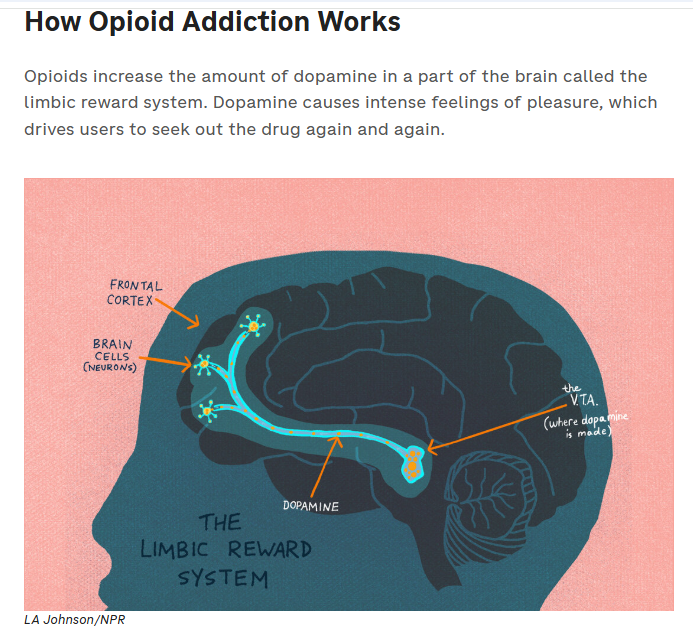
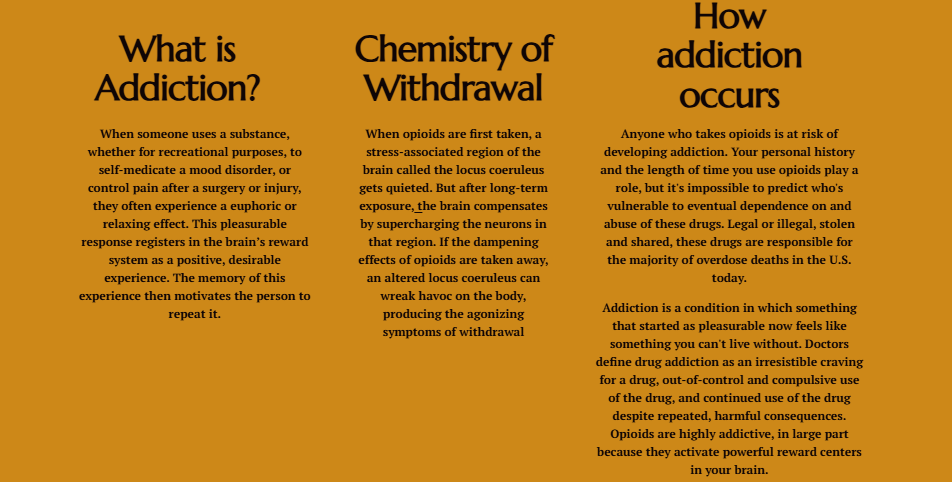
Addiction is a condition in which something that started as pleasurable now feels like something you can't live without. Doctors define drug addiction as an irresistible craving for a drug, out-of-control and compulsive use of the drug, and continued use of the drug despite repeated, harmful consequences. Opioids are highly addictive, in large part because they activate powerful reward centers in your brain.
BARRIERS TO RECOVERY
STIGMA
Although substance use disorders are chronic and treatable medical conditions, studies show people with these disorders still face discrimination and stigma (a set of negative attitudes and stereotypes) that can impact their health and well-being in numerous ways. This stigma also affects people who use drugs who do not have a substance use disorder.
There are safe, effective, and lifesaving tools available to help people struggling with substance use. However, stigma often factors into the reasons why people who need help do not seek care.
Research shows the language people use can contribute to stigma and discrimination against people with substance use disorders, including by healthcare professionals.
Recognize that addiction is a chronic disease, and treat it accordingly
The people who are addicted and dying in this opioid crisis cross all boundaries. They include high school athletes, middle-aged women, and high-functioning executives. They are individuals, not some amorphous group beyond help. Indeed, addiction in any form is not a moral failing; it is a physical and psychological disease that must be managed over time like any other chronic disease. Recovery from addiction is long and painful, and the stigma around addiction only prevents people from getting the help they need.
WORKING TOGETHER
Resources—financial, human, programmatic—are precious, and given the extent of this crisis, we cannot waste them. Unlikely collaborators must learn to work together, communicate continuously, and think beyond the perceived boundaries of their role in the community. Well-intentioned providers need to work together across areas, which likely means moving beyond the borders of their institutions and traditional roles to create new relationships and pathways in order to provide coordinated services to those in need.We cultivate expertise through structured training and mentorship that empower teams to drive sustained progress.
Be unambiguous about the risks of prescription opioids
Let’s be clear: approximately 75 percent of heroin users started on the road to addiction with prescription drugs. Let’s change the conversation with patients from a footnote that prescription opioids can be dangerous if abused, to a frank discussion about how prescription opioids and heroin affect the brain and body in the same way.
Let’s tell patients and their family members that the majority of people who become addicted to prescription opioids were not engaged in drug-seeking behavior or recreational use, and were simply taking a medication to relieve pain as prescribed by their physician. Let’s use opioids when they are the only option or for palliative or cancer care. Let’s be appropriately afraid of prescription opioids and treat them like the lethal drug they can be.